Proven Power for Today’s Supply Chains
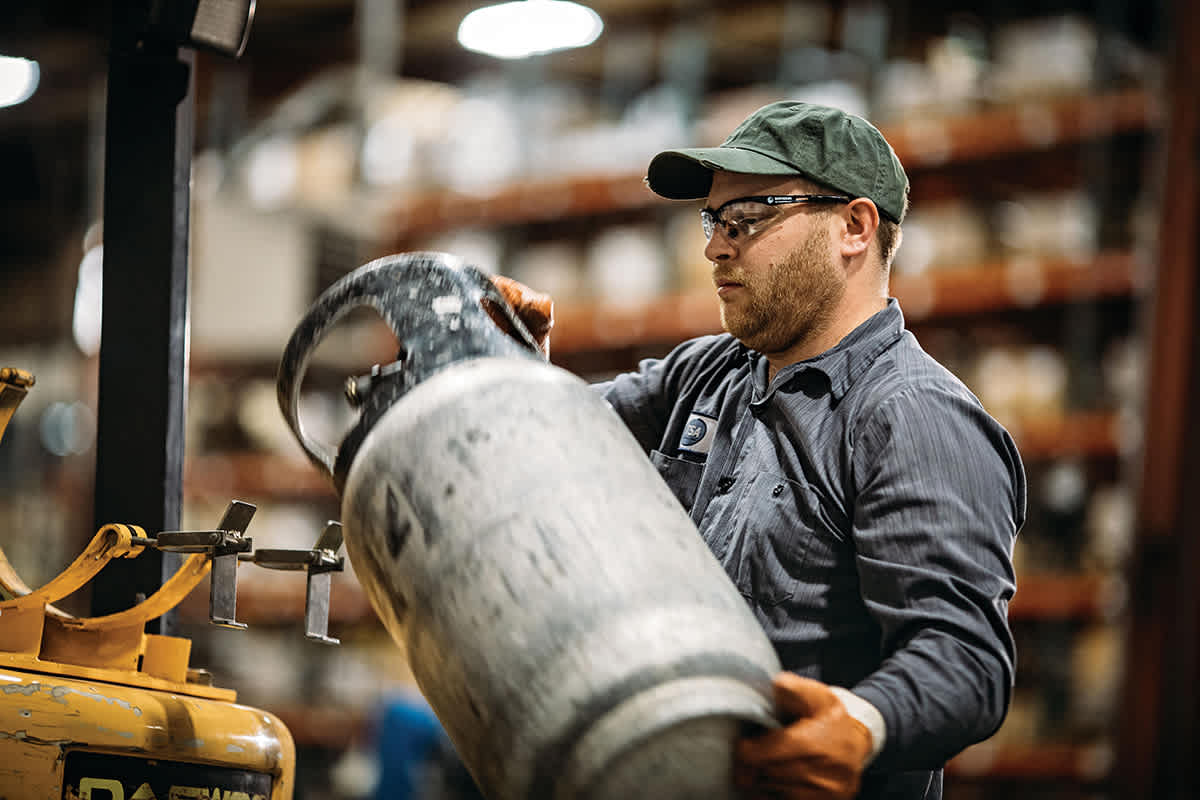
Propane delivers reliable power while helping lower operating costs and increase uptime — without lengthy charging downtime. Proven equipment and flexible on-site refueling options are available today for warehouses and distribution centers.

Why Material Handling Operations Choose Propane
Lower, More Predictable Operating Costs
Spend less on fuel, equipment, and maintenance while keeping costs more predictable over time.
Reliable Performance Shift After Shift
Keep equipment working across demanding duty cycles, indoors or out, without charging downtime.
Scalable Refueling Without Grid Upgrades
Expand on-site propane storage and fueling as equipment needs grow, without major electrical upgrades or lengthy infrastructure projects.
Proven Performance, Lower Emissions
Reduce harmful emissions compared with diesel while maintaining the power, uptime, and productivity required for the job.
Find the Right Fit for Your Operation
Propane can power equipment throughout a distribution network — from forklifts on the warehouse floor and terminal tractors in the yard to fleet vehicles and on-site power generation. Explore available applications that fit your workload and operating needs.


The Savings Go Beyond Fuel
Fuel is only one part of the total budget. Propane can also help reduce equipment, maintenance, and infrastructure costs, with an American-made fuel supply and scalable on-site refueling. Together, these advantages can help lower operating costs without sacrificing performance.

A Proven Choice for Long-Term Performance
The reliability and performance we’ve experienced using propane, combined with the ongoing technological improvements in ultra-low emission engines, make it a compelling choice not just for today, but for years to come.
Willy Won, Director of Engineering for Ports America
See How Propane Powers Supply Chain Success
Distribution networks rely on propane to control costs, maintain uptime, and reduce emissions. Explore real-world stories that show propane equipment meeting the demands of day-to-day operations.
-
How WBCT Cut Fuel Costs Without Sacrificing Performance
-
Learn how West Basin Container Terminal replaced diesel with propane terminal tractors, reducing fuel spend by 25% while maintaining the performance and uptime its high-throughput operation demands.
-
What PNCT’s Side-by-Side Test Revealed
-
See how Port Newark Container Terminal tested propane and diesel terminal tractors side by side in demanding port operations, demonstrating diesel-like performance while reducing particulate matter emissions by approximately 99%.
-
Why Fat Brain Toys Relies on Propane Forklifts
-
Follow how Fat Brain Toys uses propane forklifts to maintain consistent performance and keep products moving during peak shipping periods — including days when the company ships up to 12,000 packages.

-
How Freeman Keeps Long Shifts on Schedule
-
Find out why Freeman relies on propane forklifts during demanding events where equipment can operate an average of 14 hours a day. Quick cylinder changes and consistent power help crews stay productive.
-
Why Port Electrification Doesn’t Have to Wait on the Grid
-
Explore how propane-powered off-grid charging helped support EV infrastructure deployment at the Port of Long Beach without relying on utility-grid expansion.


Explore Material Handling Resources
Propane FAQs for Material Handling Decision-Makers
Evaluating a new energy source raises practical questions about equipment availability, performance, refueling, costs, emissions, and safety. Here are some of the key considerations for putting propane to work in material handling operations.
-
What material handling equipment can run on propane?
-
Propane can power forklifts, terminal tractors, light- and medium-duty vehicles, power generation equipment, and other applications used across warehouses, distribution centers, ports, yards, and airports.
-
Can propane equipment handle demanding duty cycles?
-
Yes. Propane equipment is used in high-utilization operations where uptime and consistent performance are essential, from continuous-duty forklift applications to demanding port, yard, and distribution-center work.
-
How is propane equipment refueled?
-
Refueling depends on the application. Forklifts commonly use exchange cylinders, while larger equipment typically uses scalable on-site storage and dispensing or mobile refueling. A propane supplier can help determine the appropriate setup.
-
Can propane help lower operating costs?
-
It can. Potential savings vary by equipment and operation, but documented material handling examples include lower fuel costs and reduced equipment and infrastructure expenses. A site-specific comparison is the best way to evaluate potential savings.
-
How does propane affect emissions?
-
Propane can reduce harmful emissions compared with diesel. The exact reduction depends on the equipment and technology, so emissions should be compared using the specific application being evaluated.
-
Can we try propane equipment before committing?
-
PERC and participating equipment partners are developing demonstration opportunities that allow qualified operations to evaluate propane equipment under real operating conditions.
See What Propane Could Mean for Your Operation
Connect with a material handling expert to evaluate equipment fit, refueling options, operating costs, emissions goals, and practical next steps for adopting propane.